
The safest way to buy skincare online is to purchase from authorized sellers, confirm the product’s Health Canada identifiers when it’s a regulated item and pay with a credit card or another protected payment method rather than a debit transfer or gift card. Following Canadian Centre for Cyber Security guidance on top of these steps closes most of the gap scammers rely on. Readers who prefer a shorter path can also choose a curated Canadian-based online seller.
TL;DR:
- Authentic products with health claims should display an eight-digit health product identifier like a DIN or NPN, which can be verified on Health Canada’s databases before purchase.
- Canadian-based licensed pharmacies, official brand websites, and verified retailers with transparent policies offer the most protection against counterfeit or mislabelled skincare items.
- Using credit cards or escrow services like PayPal provides better dispute protection than debit cards or gift cards when shopping online from unfamiliar sellers.
- Avoid overseas, social media-only sellers that lack physical addresses or traceable supply chains, as these channels significantly increase the risk of fraud or counterfeit products.
- Always review ingredient lists, expiry or Period After Opening dates, and storage instructions to ensure product safety, especially for active ingredients like vitamin C or retinoids.
Table of Contents
- Where to buy: safest seller types and channels
- How to check product authenticity and mandatory labelling
- How to verify the seller and website safety
- Safe payment methods and limiting financial exposure
- Common red flags and scams to avoid when buying skincare online
- If something goes wrong: refunds, disputes and reporting unsafe products
- Why a curated, Canadian-based seller helps reduce risk
- Guidelines for checking ingredient lists and allergen information
- Tips for understanding expiry dates and storage instructions
- How HavenlyGlow supports safe online shopping
- A few habits that make online skincare shopping safer
- Sources
- FAQ
Where to buy: safest seller types and channels
Not every online seller carries the same risk. Three categories consistently come out ahead: official brand websites, licensed pharmacies or clinics, and verified retailers with a traceable business history. Each gives you something informal sellers can’t: a documented return process, a real contact address, and a supply chain you can trace back to the manufacturer if something goes wrong.
Reputable marketplaces that vet their third-party sellers sit a step below but still offer meaningful protection, especially when the listing shows seller ratings and a clear return window.
- Official brand sites and licensed pharmacies usually offer warranties, batch tracing, and direct customer service.
- Verified retailers list a physical address, phone number, and transparent return policy you can check before paying.
- Reputable marketplaces with seller vetting add a layer of recourse that informal sellers don’t.
Overseas sellers with no local presence, and sellers operating only through social media direct messages, carry the highest risk. These channels make it hard to confirm who you’re actually paying, and there’s often no workable way to request a refund once the package ships.
How to check product authenticity and mandatory labelling
Many skincare products sold as “medicated” or marketed with a health claim fall under Health Canada’s oversight, and that means they should carry a specific identifier on the label. A missing identifier on a product that claims a health benefit is one of the clearest warning signs you’ll come across.
- Look for an eight-digit DIN, an NPN, or a DIN-HM on the packaging. Health Canada notes that authorized products carry one of these, and items without them may not have been assessed for safety at all, according to its notice on unauthorized health products.
- Search the number in Health Canada’s Drug Product Database or its Licensed Natural Health Product Database before you buy, not after.
- Check Health Canada’s recall and safety alert pages for the brand or product name, since recalled items sometimes resurface on resale sites.
If a listing has no identifier at all for a product that reads like a drug claim (acne treatment, scar reduction, anti-inflammatory serums), treat that as a reason to pause, not a detail to skip past.
How to verify the seller and website safety
A padlock icon in your browser only tells you the connection is encrypted. It says nothing about whether the business on the other end is legitimate, since fraudulent sites can and do obtain valid SSL certificates.
Look past the padlock to the details that actually separate a real retailer from a storefront built to disappear after payment.
- Confirm a visible physical address, phone number, and email, not just a contact form.
- Read the return and privacy policies in full. The Competition Bureau flags unclear policies as a common warning sign of merchandise scams.
- Check independent reviews away from the seller’s own site, and search the domain name alongside words like “scam” or “complaint”.
- Run the URL through a domain-reputation tool or Google Safe Browsing if anything feels off.
- Watch for broken internal links, a URL that doesn’t match the brand name, or pressure tactics like countdown timers urging an immediate purchase.
Pro Tip: Before you check out, open the “Contact Us” and “Returns” pages in separate tabs. A site with real policies will let you read them without creating an account first.
Safe payment methods and limiting financial exposure
Credit cards remain one of the safest ways to pay online because card issuers often guarantee reimbursement for fraudulent charges, a dispute protection that debit cards, wire transfers, and gift cards don’t offer, according to the Canadian Centre for Cyber Security.
- Use a credit card or an escrow-like payment service such as PayPal as your first choice for an unfamiliar seller.
- Consider a virtual card number or a dedicated low-limit card for one-off purchases, since it caps your exposure if the merchant turns out to be fraudulent.
- Check your statement a few days after any new purchase and turn on transaction alerts through your bank or card issuer.
Gift cards deserve a specific mention here: legitimate retailers almost never ask you to pay with one, and a seller who insists on it is a strong signal to walk away. If a seller or partner program does offer gift cards as a normal purchase option, such as Feared Beard’s gift card, that’s different from being asked to pay with one as a condition of the sale.
Common red flags and scams to avoid when buying skincare online
Most skincare scams fall into a handful of repeatable patterns.
- Counterfeit signs: a price well below every other listing, packaging that looks slightly off compared to official photos, a seller who resists returns, or a storefront reachable only through social media.
- Subscription traps: a low-cost “trial” that converts into a recurring charge. The Competition Bureau’s guidance on subscription traps recommends reading cancellation terms closely and watching for pre-checked consent boxes at checkout.
- Smishing and phishing: unsolicited texts or emails claiming a delivery problem or an exclusive discount. The Canadian Centre for Cyber Security advises against clicking links in these messages and instead verifying through the retailer’s official site or app.
If something goes wrong: refunds, disputes and reporting unsafe products
Act quickly and keep a paper trail from the start.
- Contact the seller first, in writing, and request a refund or replacement under their stated policy.
- Save your receipt, order confirmation, product photos, and the original packaging as evidence.
- If the seller won’t cooperate, contact your card issuer to request a chargeback. Ask about the timeline, since most issuers set a window for disputes.
- Report unsafe or counterfeit health products to Health Canada, which maintains recall and safety alert pages consumers can check and contribute to.
- Report suspected fraud to the Canadian Anti-Fraud Centre or the Competition Bureau so the pattern gets flagged for other shoppers too.
Why a curated, Canadian-based seller helps reduce risk
A curated storefront narrows your decision down to products that have already passed a basic screening step, which cuts your exposure to counterfeit or mislabelled items before you ever reach checkout. Some curated Canadian-based retailers offer secure checkout and a 30-day return policy, which give you a documented path back if a product doesn’t suit you.
Before buying from any curated seller, including HavenlyGlow, check the product page for a full ingredient list, any applicable health product identifier, and the stated return window. Those three details tell you more about a listing than star ratings ever will.
Guidelines for checking ingredient lists and allergen information
Read the full ingredient list before adding anything to your cart, not after it arrives. Skincare ingredients are listed in descending order by concentration, so the first five or six names on the label tell you most of what the product actually contains. If you have a known sensitivity (fragrance, specific preservatives, certain plant extracts), scan for that ingredient by its chemical name as well as its common one, since labels don’t always use the name you’d recognize.
Cross-check the ingredient list against the product photos and the brand’s own website when you can. A mismatch between what’s printed on the listing and what’s printed on the actual packaging in your delivery photo is worth flagging with the seller immediately.
If a product carries a DIN, NPN, or DIN-HM, the active ingredients listed in Health Canada’s database should match what’s on the package you receive. Any discrepancy there is a reason to stop using the product and contact the seller.

For anyone with eczema, rosacea, or another diagnosed skin condition, a patch test on a small area before full use is a reasonable precaution regardless of how reputable the seller is. This guide offers general safety and shopping habits, not medical advice, so check with a healthcare provider about ingredients relevant to a specific skin condition.
Tips for understanding expiry dates and storage instructions
Most skincare packaging carries either an expiry date or a Period After Opening symbol, a small jar icon with a number like “12M” meaning the product is good for twelve months once opened. Check for one or the other before buying, and treat a complete absence of any date marking as a reason to ask the seller directly.
Online purchases add a wrinkle here: you can’t smell or inspect the product before it arrives, so pay attention to how long it may have sat in a warehouse or in transit. A product that arrives with less than half of its shelf life remaining is worth raising with the seller, particularly for active ingredients like vitamin C or retinoids that degrade faster once exposed to light and air.
Storage instructions matter just as much as the date itself. Many actives lose potency if left in a hot car, a sunny windowsill, or a bathroom with heavy humidity and temperature swings. Store serums and treatments in a cool, dry spot away from direct light, and keep the original packaging if it’s opaque or tinted, since that packaging is often doing real work to protect the formula.

How HavenlyGlow supports safe online shopping
Shopping with a seller that’s already done some of the screening work takes pressure off every purchase decision. Certain curated e-commerce sites carefully select beauty and skin care products alongside wellness and self-care essentials, sometimes including secure checkout and a 30-day return policy.
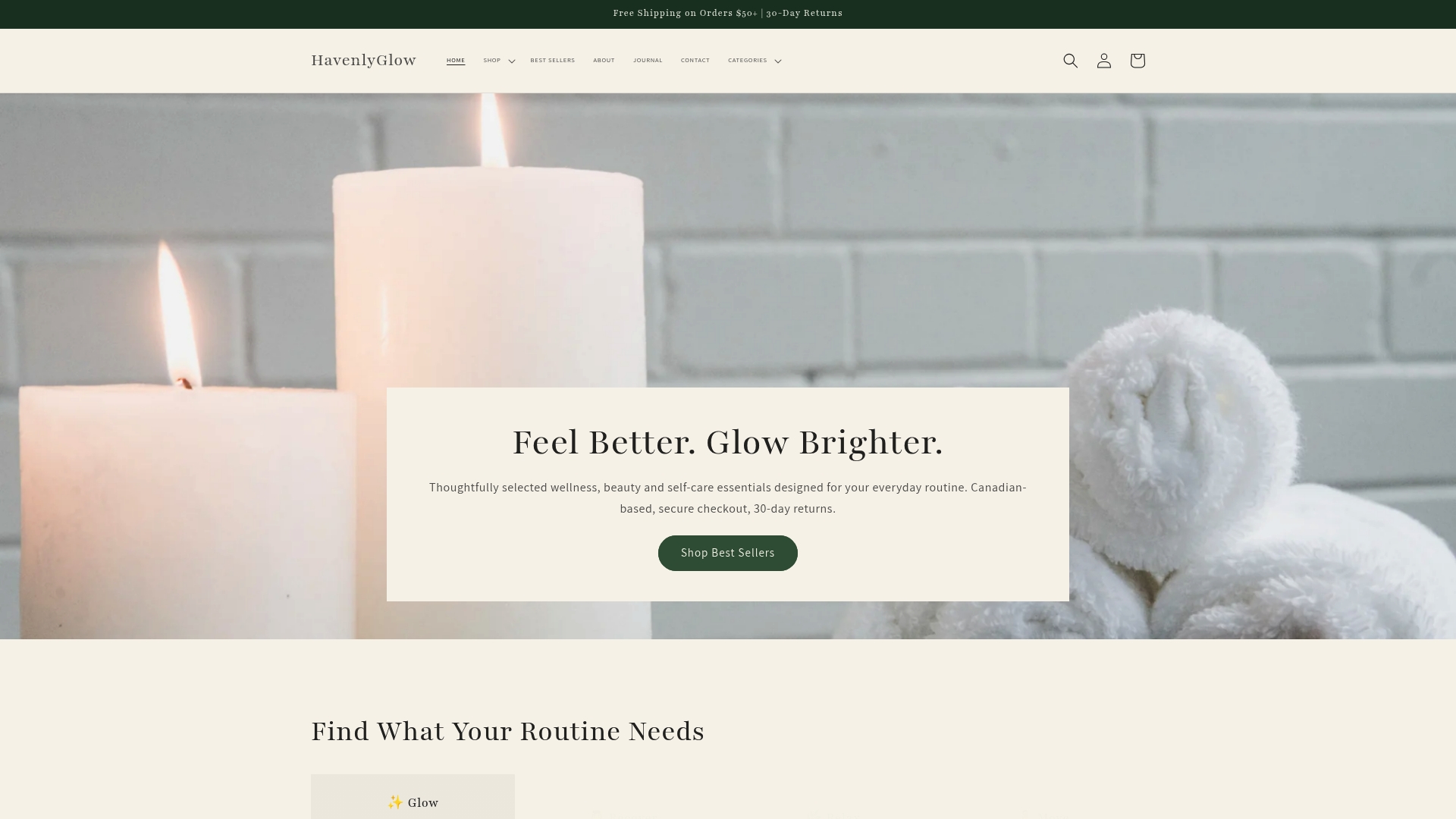
Before you buy, it’s worth spending a minute on the basics covered in this guide:
- Check the ingredient list and any health product identifier on the product page.
- Confirm the return window and contact details before you add anything to your cart.
- Browse the Wellness & Recovery or Self-Care & Mindfulness collections if you’re building out a broader routine, not just a single product.
Visit HavenlyGlow to review current listings and policies before you check out.
A few habits that make online skincare shopping safer
Vigilance isn’t a one-time checklist, it’s a habit that gets faster the more you use it. Checking a label, a return policy, and a payment method takes under a minute once you know what you’re looking for. If you have questions about a specific product, our customer support team and product pages are there to help you decide with confidence.
— HavenlyGlow Team
Sources
- How to shop online safely - ITSAP.00.071 - Canadian Centre for Cyber Security
- Unauthorized health products removed from sale — Health Canada
- Sale of merchandise scams — Competition Bureau of Canada
- Smishing: Protect yourself from SMS attacks (ITSAP.00.103) - Canadian Centre for Cyber Security
FAQ
What is the best website for buying skincare products online?
There’s no single “best” site for everyone, since the right choice depends on whether you need a specific regulated product or a general skincare routine. Official brand sites, licensed pharmacies, and curated Canadian retailers like HavenlyGlow are all reasonable starting points, provided you confirm labelling, policies, and payment protection first.
What are the best skincare websites to buy online?
The safest options share the same traits: visible contact information, clear return policies, and verifiable ingredient and identifier information on each product page. Look for these traits rather than chasing a specific ranked list, since legitimacy depends on the seller’s practices, not its popularity.
What is the best online store for skincare products?
A strong online skincare store discloses its return policy, lists full ingredients, and shows a Health Canada identifier on any product making a health claim. Some Canadian-based retailers offer secure checkout and a 30-day return policy on curated beauty and skin care selections.
Where can I buy legit skincare?
Buy from official brand websites, licensed pharmacies, or verified retailers that list a physical address and transparent policies, and confirm any health product identifier through Health Canada’s database before paying. Avoid sellers reachable only through social media messages, since the Competition Bureau notes these channels make it harder to verify who you’re actually paying.
Recommended
- How to Build an At-Home Skincare Routine, Step by Step
- How to Use a Facial Massager in Your Skincare Routine
This article is for general information only and is not medical advice. Please talk to a healthcare professional before starting any new supplement or therapy device, especially if you are pregnant, nursing, taking medication or managing a health condition.