
Home red light therapy can genuinely help with fine lines, some hair thinning, and mild pain, but it works slower and less dramatically than clinic treatments, and the science is still catching up to the marketing. Expect gradual change over weeks of consistent use, not overnight results, and never skip wavelength-appropriate eye protection.
TL;DR:
- Home red light therapy devices are generally less powerful than clinical equipment, requiring weeks or months of consistent use to see noticeable results.
- Wavelengths in the 630–660 nanometre range for red light and 830–850 nanometre for near-infrared are essential for therapeutic effectiveness.
- Devices should provide published irradiance or fluence data to ensure a sufficient light dose reaches the skin or scalp.
- Eye protection rated for the specific wavelength is mandatory during every session to prevent potential ocular risks.
- Expect modest improvements in skin and hair health over time, with no quick fixes or guarantees, emphasizing science-based product choices.
Table of Contents
- What is home red light therapy, and how does it work?
- Does the evidence actually support home red light therapy?
- Masks, caps, panels, or wands: which format fits your goal?
- What should you check before buying a red light device?
- Is home red light therapy safe, and what about eye protection?
- How do you actually use a red light device at home?
- Why Havenlyglow takes an evidence-first approach to red light devices
- Havenlyglow’s at-home red light picks, and what each one actually solves
- Sources
- FAQ
What is home red light therapy, and how does it work?
Red light therapy, sometimes called photobiomodulation, uses specific wavelengths of red and near-infrared light to stimulate activity inside your cells’ mitochondria. The theory is that this extra energy input encourages cells to produce more ATP, the molecule that powers repair processes like collagen synthesis and tissue recovery. That is the mechanism behind most consumer claims about firmer skin, calmer inflammation, or fuller-looking hair.
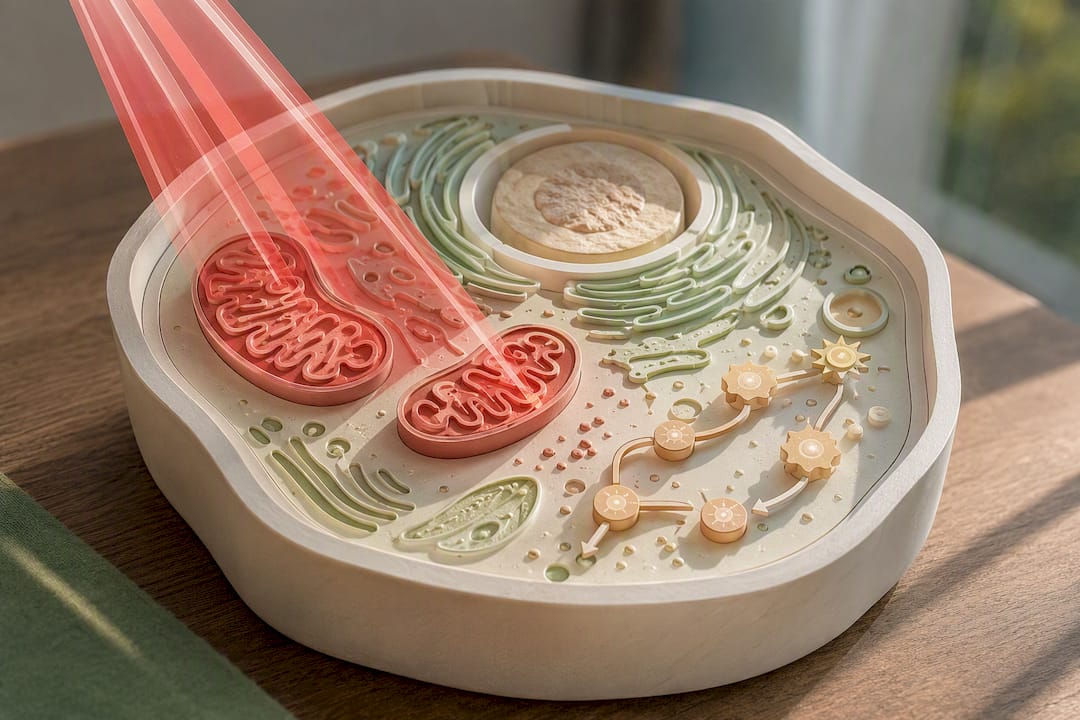
What actually matters is not the colour of the light on the box. It is the specific wavelength and the irradiance, meaning how much light energy actually reaches your skin. A device can be labelled “red light” and still deliver a wavelength or intensity too weak to do much. Comparing red versus near-infrared marketing terms means looking at the actual numbers a manufacturer publishes, not the language on the packaging.
Home devices come in a few standard formats, each suited to different goals:
- Masks: cover the full face for wrinkles, tone, and general skin health, worn for short daily or near-daily sessions.
- Panels: larger flat surfaces for treating bigger areas like the back, chest, or thighs, often used a few feet away from the body.
- Wands: handheld and targeted, useful for a scar, a joint, or a small patch of skin, but slow if you need to cover a wide area.
- Caps or helmets: fitted with LEDs pointed at the scalp, designed for hair thinning and regrowth support.
- Beds: full-body enclosures, mostly found in clinics and studios rather than home setups, due to size and cost.
Each format trades off coverage, convenience, and power differently, which matters more once you start comparing devices against your actual goal.
Does the evidence actually support home red light therapy?
The Cleveland Clinic describes red light therapy as an emerging treatment, meaning it shows genuine promise for wrinkles, acne, scarring, and hair regrowth in a number of trials, but researchers still want more high-quality studies before calling any of it settled science. That is a meaningfully different claim than “clinically proven,” and it is worth sitting with. Emerging treatments can still be worth trying. They just come with fewer guarantees.
One detail gets buried in a lot of retail marketing: at-home devices are typically less powerful than the equipment used in clinical trials and dermatology offices, according to both Cleveland Clinic and WebMD. That gap in power doesn’t mean home devices are useless. It means the timeline and scale of results you should expect at home are more modest than what a study using professional-grade panels reports.
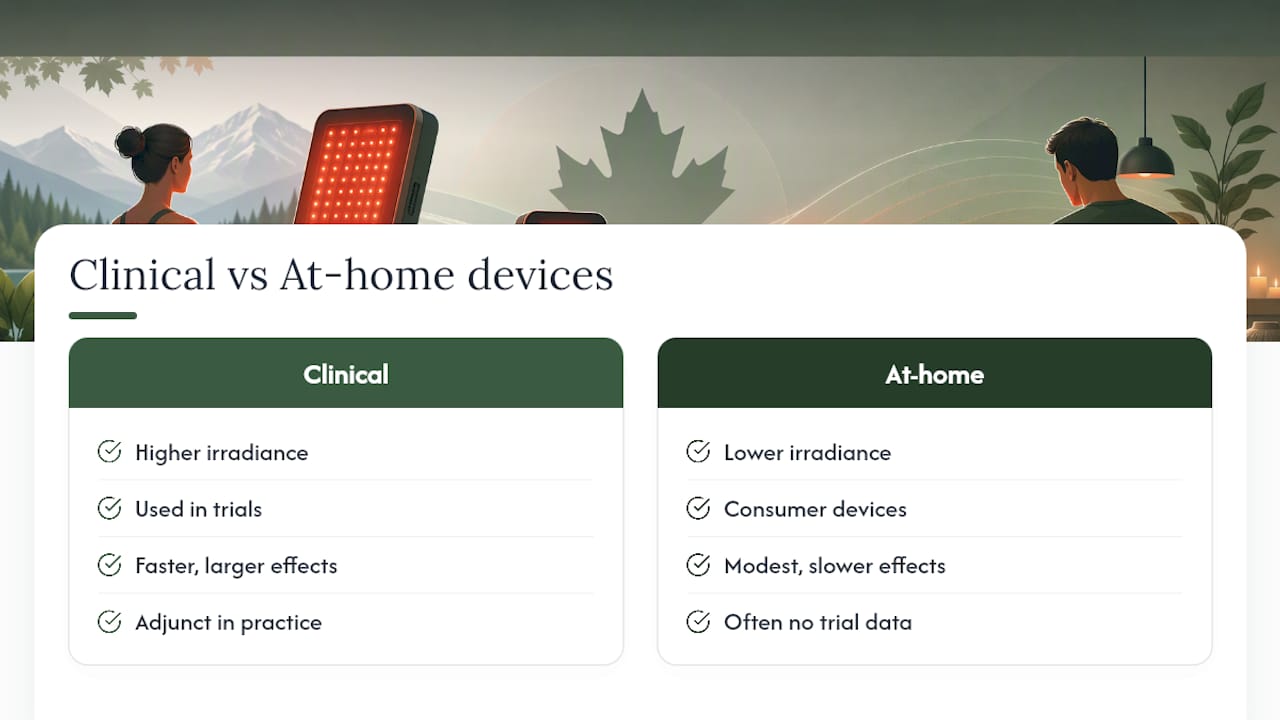
The pattern across clinical reviews is consistent: meaningful effects showed up after repeated sessions over weeks to months, not after a single treatment. A review of photobiomodulation research found that trials demonstrating measurable skin or hair changes almost always involved sustained, consistent use rather than occasional sessions. Skipping around, using a device for a week and quitting, is close to the same as not using it at all.
The American Medical Association frames red light therapy the way most dermatologists actually talk about it in practice: an adjunct to your existing skincare or recovery routine, not a replacement for it, and not a miracle cure for anything. That framing should shape how you shop. A device with published specifications and some trial data behind it is a far safer bet than one riding on testimonials alone.
Masks, caps, panels, or wands: which format fits your goal?
The right device format depends entirely on what you’re treating and how much space, time, and money you’re willing to give it.
- Face masks are the most convenient option for facial skin concerns like fine lines, redness, or general tone. Sessions are short, hands-free, and easy to fold into an existing routine, but coverage stops at the neckline.
- Hair caps and helmets wrap LEDs around the scalp for hair regrowth support. Fit and scalp contact vary by design, and a poorly fitted cap can leave gaps in coverage that reduce how much light actually reaches the follicles.
- Panels treat larger areas, like a full back or both thighs, in a single session, and tend to deliver more total light energy than a wearable device. The trade-off is upfront cost and the physical space a panel needs in a bedroom or bathroom.
- Beds offer full-body treatment in one sitting, but they belong to clinics and studios far more often than homes, given their size and price.
- Wands are the most targeted option, ideal for a single scar, a stiff joint, or a small patch of skin, but painfully slow if your goal is broader coverage.
If you’re treating your whole face, a mask usually beats a wand on convenience alone. If you’re chasing hair density along your part line, a fitted cap will get more consistent light to the scalp than trying to angle a panel at your head every night.
What should you check before buying a red light device?
Buying a home device without checking a few numbers first is how people end up disappointed. Use this as a working checklist at the point of purchase:
- Confirm the published wavelengths. Look for red light in the 630 to 660 nanometre range and near-infrared in the 830 to 850 nanometre range. A peer-reviewed product guidance review points to these bands as the therapeutic window most supported by current research.
- Look for irradiance or fluence data, not just wavelength. Irradiance tells you how much light energy actually reaches your skin, and its absence on a product page is a red flag worth taking seriously.
- Check for linked studies or trial data. Manufacturers who commissioned or cited real research on their specific device tend to be more transparent across the board.
- Note any regulatory signals, such as FDA 510(k) clearance where a device has it. In Canada, devices fall under Health Canada’s Radiation Emitting Devices Act, which places responsibility on manufacturers and importers to ensure the device doesn’t create a health risk. REDA does not require pre-market registration, so a device being legally sold in Canada doesn’t automatically mean it has been independently tested.
- Watch the language. Words like “cure,” “guaranteed,” or “instant results” belong on a device you should skip. Transparent manufacturers describe what their device does and cite where that claim comes from.
Pro Tip: Save the product page or spec sheet before you buy. If a manufacturer quietly updates its listed wavelength or irradiance numbers later, you’ll have a record of what you were actually promised.
Regulatory marks are a useful sanity check but not a perfect guarantee. Health Canada leaves compliance largely in manufacturers’ hands, so the burden of verifying real specifications still falls on you as the buyer.
Is home red light therapy safe, and what about eye protection?
Wavelength-specific eye protection is not optional. Consensus safety guidance in the photobiomodulation literature flags ocular safety as an active concern precisely because long-term data on eye exposure is still limited. Use the goggles that came with your device, or an equivalent rated for the same wavelength range, every single session, no exceptions for “just a few minutes.”
Beyond your eyes, a few practical points matter for skin safety:
- Start with the session length and frequency your manufacturer recommends. Don’t assume longer automatically means better results.
- Watch for redness, tightness, or unusual sensitivity, particularly if you have a darker skin tone. The AMA notes that people with more melanin in their skin may be more prone to persistent redness or hyperpigmentation from light-based treatments, and should ease in with shorter sessions rather than jumping straight to a manufacturer’s maximum recommended time.
- Long-term effects of repeated home exposure over years are not fully studied yet. That’s not a reason to panic, but it is a reason to pay attention to your own skin’s response over time.
- If you notice persistent irritation, unusual pigment changes, or anything that doesn’t settle within a day or two, stop using the device and check with a clinician before restarting.
Pro Tip: If you wear contact lenses, remove them before your session and use goggles anyway. Contacts don’t block light and can trap heat against the eye.
How do you actually use a red light device at home?
Consistency matters more than intensity here. Follow a straightforward routine and give it real time before judging results.
- Start conservatively. Many clinical trials on photobiomodulation used sessions several times a week over a period of weeks to months to see measurable change, so plan for a similar commitment rather than a one-week trial run.
- Match your distance to the manufacturer’s irradiance guidance. Standing too far from a panel, or holding a wand too far from skin, drops the actual light dose you receive even if your session timer says you did everything right.
- Clean the device regularly. Wipe LED surfaces with a soft, dry or slightly damp cloth as directed, and store the device away from moisture and direct sunlight to protect the diodes over time.
- Track your progress honestly. Take baseline photos in consistent lighting and keep a short note of what you notice. One clinical review on photobiomodulation suggests checking in around the six to eight week mark, which lines up with when many trials first reported measurable change.
- Consult a clinician if something feels off, or if you’re not seeing any change after a couple of months of consistent use. A dermatologist can help you figure out whether the issue is the device, your skin condition, or your expectations.
Why Havenlyglow takes an evidence-first approach to red light devices
Chasing the newest wellness trend without checking the science behind it wastes money and, occasionally, your skin’s tolerance. Havenlyglow curates wellness and self-care products for a Canadian audience with that exact problem in mind: matching real specifications and realistic expectations to products people actually buy. That means favouring transparent product information over inflated claims, and backing purchases with secure checkout and a 30-day return policy so you’re not stuck with a device that didn’t fit your routine.
The guidance in this article, on wavelengths, irradiance, session cadence, and eye protection, is the same lens used when deciding what belongs in a curated catalogue. Evidence-informed curation isn’t a slogan here. It’s the standard a product needs to clear before it’s worth your consideration.
— Jennifer
Havenlyglow’s at-home red light picks, and what each one actually solves
If you’ve read this far, you already know what to check before buying: wavelength, irradiance, and realistic expectations for the timeline.
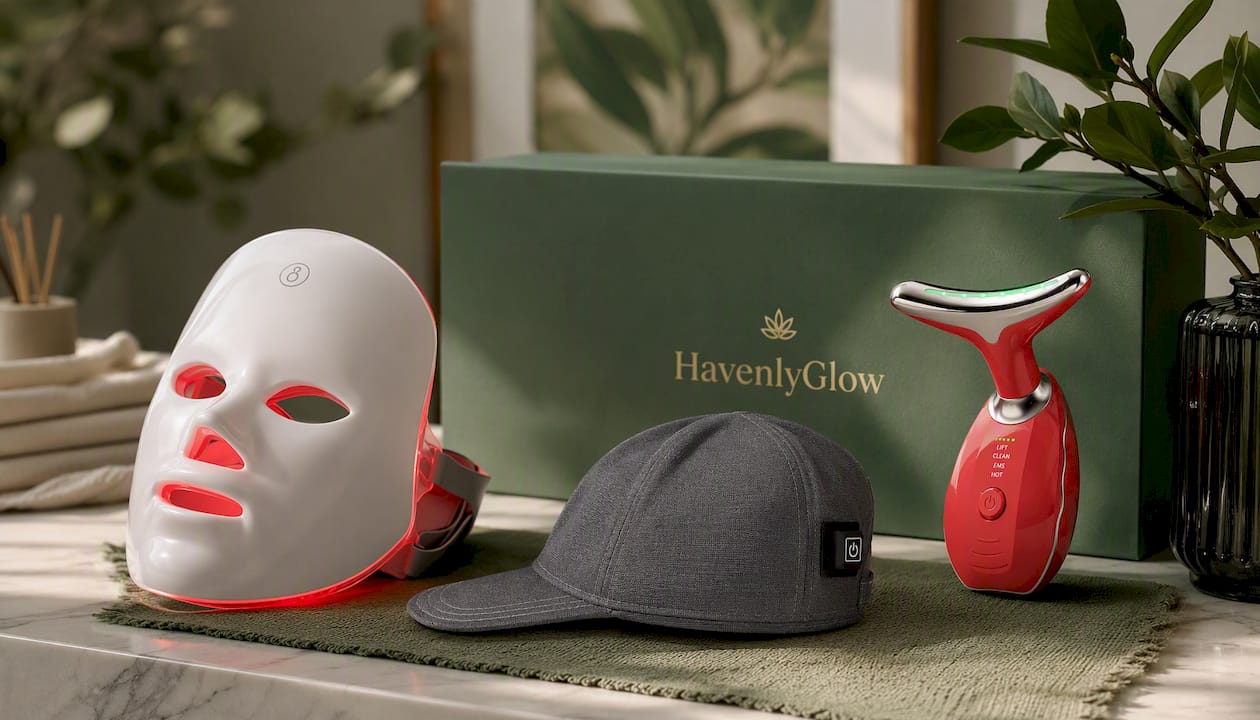
The LED Red Light Face Mask is built for facial skin concerns, fine lines, tone, and that after-a-long-week dullness, worn hands-free for a few minutes at a time as part of an evening routine. For scalp and hair concerns, the Red Light Hair Care Cap wraps LEDs around the head for a more targeted approach than trying to angle a panel at your part line every night. And for anyone who wants LED light paired with microcurrent stimulation in one device, the 7-Color LED Microcurrent Facial Massager combines both technologies for a single facial routine, and pairs well with the difference between LED and microcurrent devices if you’re deciding which technology to prioritize.
Whichever device you’re considering, confirm its published wavelength and irradiance before you buy, and follow the safety guidance in this article once it arrives. Browse the full collection at Havenlyglow to compare options against your specific goal.
Sources
For readers who want to go straight to the primary material behind this guide:
- Red Light Therapy: Benefits, Side Effects & Uses — Cleveland Clinic
- Red Light Therapy: Effectiveness, Treatment, and Risks — WebMD
- Radiation emitting devices act and regulations — Health Canada
- 6 things patients should know about red light therapy — AMA
This article is general information, not a substitute for advice from a qualified doctor. Consult a qualified healthcare professional about your own circumstances before acting on anything here.
FAQ
Does home red light therapy actually work?
For some concerns, yes: research reviewed by Cleveland Clinic points to genuine promise for wrinkles, hair regrowth, and certain pain conditions, though results are typically gradual and researchers still want more high-quality trials to confirm the full scope of benefits.
What is the best red light therapy device to use at home?
The right device depends on your goal: a face mask like Havenlyglow’s LED Red Light Face Mask suits facial skin concerns, while a fitted cap works better for scalp and hair regrowth support. Prioritize any device that publishes its wavelength and irradiance data.
What is the downside of red light therapy?
Home devices are generally less powerful than clinic equipment, which means slower and more modest results, and long-term safety data on repeated home exposure is still limited. Eye protection is essential every session, and some people, especially those with darker skin tones, may notice redness or sensitivity if they start with sessions that are too long.
How do I choose a reliable red light device in Canada?
Look for a device that lists specific wavelengths in the 630 to 660 nanometre or 830 to 850 nanometre ranges, publishes irradiance data, and complies with Health Canada’s Radiation Emitting Devices Act. Avoid any product that leans on vague claims instead of measurable specifications.